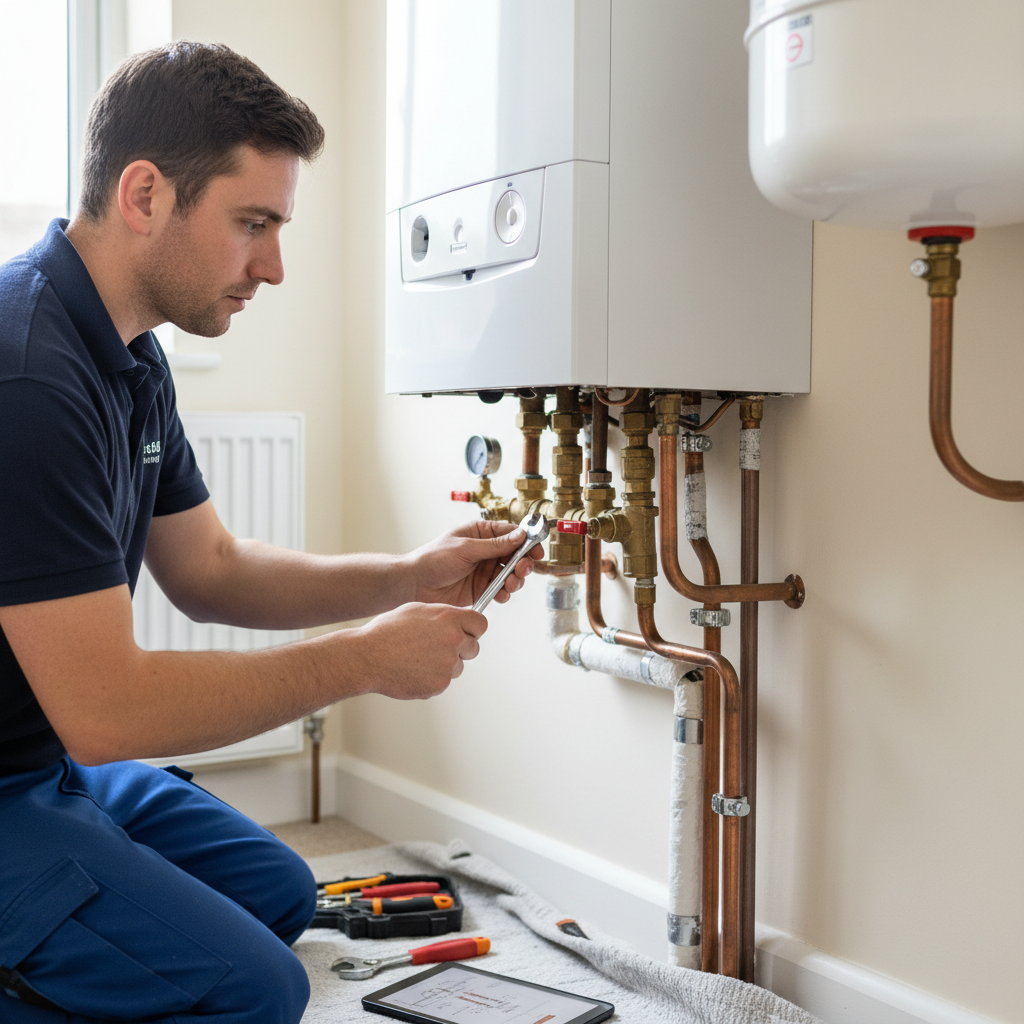
Boiler pressure dropping overnight? This guide explains the real causes, the safe checks you can do, and when to call a Gas Safe engineer.
Boiler Losing Pressure Overnight? Causes & Fixes Explained
If your combi or system boiler keeps dropping pressure, you’re not alone.
Pressure loss is one of the most common UK heating issues, and it’s often fixable with a few safe checks.
Acting quickly protects your boiler, improves efficiency, and prevents bigger repair bills.
How to Tell If Your Boiler Is Losing Pressure
Most boilers have a pressure gauge on the front panel showing the system pressure in bar.
When the system is cold, normal pressure is typically around 1.0–1.5 bar, and it may rise to about 2.0 bar when hot.
If the gauge regularly drops below 1.0 bar, you likely have a pressure loss problem.
Frequent lockouts, fault codes, or radiators going cold can also point to low pressure.
- Gauge sitting under 1.0 bar when the system is cold
- Boiler shutting down with low-pressure warnings or error codes
- Gurgling sounds or radiators cold at the top due to air ingress
- Water drips outside from the copper pressure relief pipe
- Need to top up the filling loop more than once a month
Safe First Checks Before You Touch the Boiler
Some pressure drops are caused by simple user-side issues, so start with quick, safe checks.
Do not remove any boiler casing or touch sealed components inside the appliance.
Never open the boiler casing—that’s work for a Gas Safe engineer only.
Shut the system down if you smell gas or see significant leaks, and seek professional help.
- Inspect visible pipework, valves, and radiator valves for damp spots or drips
- Confirm both filling loop isolation valves are fully closed after any top-up
- Bleed radiators if you can hear air, then recheck pressure after bleeding
- Look for discharge from the external pressure relief pipe after a heating cycle
- Check the condensate pipe for blockages if recent cold snaps occurred
How to Repressurise a Combi Boiler (Filling Loop)
If you’ve confirmed there’s no obvious leak, it’s usually safe to top the pressure up yourself.
Most combi boilers use a silver braided hose called a filling loop, fitted with two small isolation valves.
Get familiar with the gauge and stop if anything seems unusual or if pressure rises too quickly.
If in doubt, pause and seek advice from a qualified professional.
- Turn the boiler off and let the system cool for 15–30 minutes
- Locate the filling loop and turn both small valves to align with the pipe
- Watch the pressure gauge rise slowly towards 1.2–1.5 bar
- Close both valves fully as soon as target pressure is reached
- Turn the boiler back on and run the heating for 10–15 minutes
- Bleed any cold-top radiators, then re-check and top up if needed
- Re-check pressure over the next 24–48 hours for signs of further loss
Common Reasons Your System Keeps Losing Pressure
Consistent pressure loss points to a fault that simple topping up won’t cure.
Finding the root cause avoids repetitive top-ups, scale damage, and higher gas bills.
Weeping Joints and Radiator Valve Leaks
Small drips on radiator valves, towel rails, or compression joints are frequent culprits.
Look for green/white crust on fittings or plaster staining under pipes, especially on lower floors.
Pressure Relief Valve (PRV) Letting By
If the PRV has lifted due to past overpressure, it may continue to pass water slowly.
Check the external copper pipe after a heating cycle; fresh drips indicate a PRV issue.
Expansion Vessel Problems
A flat or failed expansion vessel can cause big pressure swings when the system heats up.
Pressure may spike high when hot, then crash to near zero when cool, often tripping the PRV.
Air Removal After Bleeding Radiators
Bleeding removes trapped air but also drops system pressure by design.
If you’ve bled multiple radiators, expect to repressurise once or twice until the system stabilises.
Hidden Leaks Under Floors or in Walls
Pipework can leak invisibly beneath floors, especially in older homes or after building work.
Unexplained damp smells, warped flooring, or boiler pressure dropping only when heating runs can be clues.
Sludge, Corrosion, and Blockages
Magnetite sludge restricts flow, traps air, and can stress components, leading to pressure swings.
If some radiators stay cold at the bottom, a clean or power flush assessment may be warranted.
Internal Boiler Faults
Leaking plate heat exchangers, auto air vents, or manifold seals can dump water inside the case.
Do not open the boiler; internal diagnosis must be done by a Gas Safe engineer.
Preventing Future Pressure Drops
Once the system is stable, a few habits and upgrades can dramatically improve reliability.
Think of these as low-cost insurance against wasted energy and premature component failure.
- Book annual boiler servicing to test expansion vessel charge and PRV operation
- Fit a magnetic filter and keep inhibitor levels topped up to control sludge
- Label and double-check filling loop valves after every top-up
- Bleed radiators at the start of heating season and recheck pressure
- Address minor weeps promptly to protect floors and joists
- Consider a system clean or power flush if radiators are heavily sludged
Need Professional Help?
If your boiler won’t hold pressure, or you see discharge from the PRV pipe, it’s time for expert diagnosis.
Issues with the expansion vessel, PRV, or internal components require a qualified, Gas Safe registered engineer.
Net-Plumbers is Gas Safe registered (No: 217785) and experienced with all major boiler brands across London.
We can pinpoint leaks, test vessels, replace faulty valves, and restore stable, efficient operation.
Call us on 0330 520 1642 or book online for a convenient appointment.
Need Help?
Got a plumbing or heating issue?
Gas Safe engineers available 24/7 across London. No call-out fee.