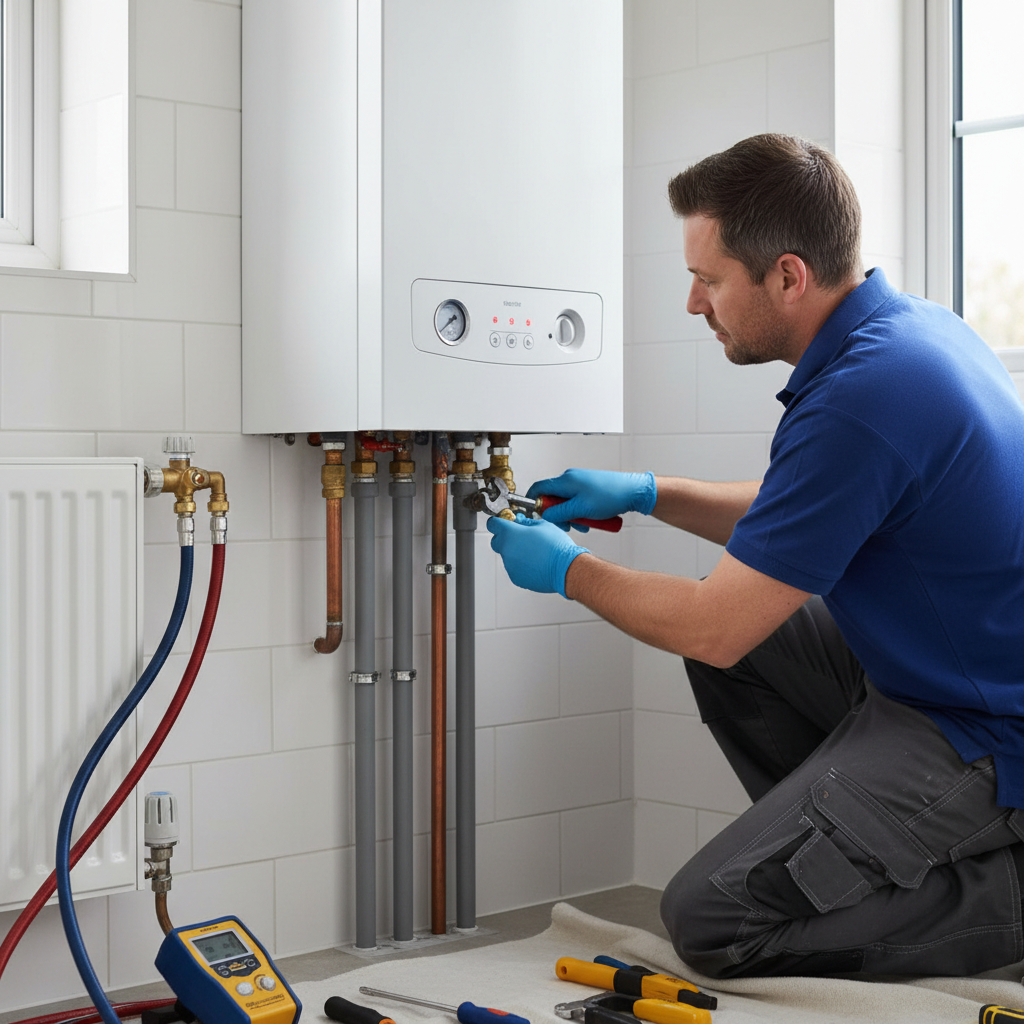
Boiler pressure keeps dropping? This guide explains the real causes, safe DIY checks, how to repressurise, and when a Gas Safe engineer should step in.
Boiler Losing Pressure? Causes, Fixes and When to Call
If your boiler pressure keeps dropping, you’re not alone. It’s one of the most common heating issues in UK homes, and it usually points to a problem that’s fixable.
This guide explains what low pressure really means, the safest DIY checks, how to repressurise, and when to call a Gas Safe engineer.
What “Low Boiler Pressure” Really Means
Most domestic boilers are happiest around 1.0–1.5 bar when cold. As your system heats, pressure can rise to about 1.8–2.0 bar.
If the gauge sits below 1.0 bar cold, you’ll likely get lockouts, poor heating, or no hot water. If it’s above 2.5–3.0 bar hot, the system can vent water via the safety valve.
The safe operating range
Check the green zone or marker on your boiler’s pressure gauge. That’s the manufacturer’s recommended range.
Running long-term below or above the range stresses components and can hide underlying faults. Correct pressure protects pumps, valves, and heat exchangers.
Quick Checks Before You Top Up Pressure
Never rush to add water without looking for a cause. Frequent topping up accelerates corrosion and invites fresh air into the system.
Start with simple, safe observations that don’t involve removing any boiler covers. Do not remove the boiler casing—that’s for Gas Safe engineers only.
Read the gauge correctly
Confirm the gauge reading when the system is fully cold and again when it’s hot. Note both values.
If the needle swings wildly or the display flickers, the gauge or sensor might be faulty, masking the real issue.
Look for obvious leaks
Walk the route of your pipework and radiators. Check valve tails, bleed points, and visible joints.
Inspect the copper pipe that exits outside near the boiler (pressure relief discharge). Regular drips here suggest an overpressure or valve fault.
- Green or white crust on copper joints indicates slow weeping
- Dark stains on plaster or skirting hint at hidden pipe leaks
- Radiator bottoms damp or rusting suggest pinholes from sludge
- Occasional hiss from a valve can signal passing water
- Wet patches below the boiler point to internal component leaks
- Traces of water at the condensate trap may be unrelated—don’t confuse the two
How to Repressurise a Combi Boiler Safely
If you’ve found no obvious leak and the system has simply lost a little pressure over time, a top-up via the filling loop can restore normal operation.
Warning: Stop if you’re unsure. Anything involving gas components, internal parts, or electrics must be left to a Gas Safe engineer.
Using an external filling loop
Most combi boilers have a silver braided hose—the filling loop—linking the mains cold to the heating return. Two small isolation taps control flow.
Have a towel and a watch ready. Aim for about 1.2 bar when the system is cold and off.
- Turn the boiler off and let it cool until radiators are cold
- Ensure both filling loop taps are initially closed (handles across the pipe)
- Open the first tap slowly, then the second tap to allow water in
- Watch the gauge rise steadily; do not leave the loop unattended
- Close both taps once the needle reaches ~1.2 bar cold
- Bleed any radiators that feel spongy or gurgle, starting upstairs
- Top up again if the gauge dropped after bleeding, returning to ~1.2 bar
- Remove the hose if it’s a detachable loop and refit caps to prevent drips
Boilers with an internal filling key
Some models use a plastic key instead of a hose. Insert and lock the key as per the boiler’s panel instructions, then turn the knob to fill.
Close the knob firmly once you reach the target pressure. Never exceed 1.5 bar cold, and never force the control.
Why Your Boiler Keeps Losing Pressure
Repressurising should be occasional. If you’re topping up monthly—or worse, weekly—there’s an underlying fault to find.
Common culprits are leaks, expansion vessel issues, or a passing pressure relief valve (PRV). Each has different signs.
Expansion vessel or PRV problems
If pressure rises fast when heating starts and then drops to zero by morning, the expansion vessel may have lost its air charge. Water has nowhere to expand safely.
A PRV that once lifted at high pressure can trap debris and seep constantly. You’ll often see drips from the outside copper discharge pipe.
System leaks and corrosion
Tiny leaks under floors or behind walls bleed pressure slowly. Oxygen introduced by frequent top-ups accelerates sludge and pinhole corrosion.
Look for rooms that heat unevenly, cold spots at radiator bottoms, or recurring air in the same radiators—these hint at corrosion and sludge circulation issues.
- Repumping and repressurising won’t cure a vessel with no air charge
- PRVs that have lifted may need replacement to reseal properly
- Micro-leaks can require dye testing or pressure testing to confirm
- Heavy sludge often calls for professional power flushing and inhibitor
Prevention: Keep System Pressure Stable
Once fixed, a healthy system should hold pressure for months. A little proactive care goes a long way.
Set reminders at the start of heating season to check the gauge cold and hot. Log readings so you spot trends early.
Simple maintenance habits
These tasks reduce air ingress, corrosion, and unnecessary strain on components. They also help your engineer diagnose issues faster.
If you’re unsure about any step, stop and seek advice. Never attempt work inside the boiler—that’s restricted to Gas Safe engineers.
- Bleed radiators at the start of winter, then top up to ~1.2 bar cold
- Check the external PRV discharge pipe for any sign of dripping
- Ensure automatic air vents are capped or set as per manufacturer guidance
- Have inhibitor levels checked during annual service to protect against sludge
- Fit quality TRVs and lockshield valves to balance heat and reduce stress
- Consider a magnetic filter on the return line to trap circulating debris
When to Call a Gas Safe Engineer
Some symptoms point strongly to a component fault. At this stage, DIY top-ups only mask the problem and may worsen damage.
Call a professional for safe testing, correct parts, and system balancing. Net-Plumbers is Gas Safe registered, so you’re in safe hands.
- Pressure loss returns within days or hours after topping up
- Drips from the copper discharge pipe outdoors suggest PRV issues
- Gauge climbs over 2.5–3.0 bar when heating, then falls to near zero cold
- Any signs of leaks inside the boiler casing or underneath the unit
- Frequent air in the same radiators despite bleeding and inhibitor
- Boiler locks out with low-pressure or overpressure error codes
Need Professional Help?
If your boiler won’t hold pressure or you suspect a fault with the expansion vessel, PRV, or a hidden leak, it’s time for expert diagnosis.
Net-Plumbers is a London-based, Gas Safe registered company (Gas Safe No: 217785) experienced in pressure faults, leak trace, vessel recharging or replacement, and system protection.
Call us on 0330 520 1642 or book online for a prompt, tidy repair that keeps your heating reliable and safe.
Need Help?
Got a plumbing or heating issue?
Gas Safe engineers available 24/7 across London. No call-out fee.